TUSCALOOSA, Alabama – A federal judge has sentenced a Mississippi man to 25 years in prison for his role in a fentanyl and methamphetamine conspiracy that reached into the Tuscaloosa and Birmingham areas, U.S. Attorney Phillip W. Williams Jr. announced.
U.S. District Judge Edmund G. LaCour sentenced 36-year-old Jabreon Deshon Mosley Jr. of Meridian, Mississippi, to 300 months. A federal jury had convicted Mosley of conspiracy to possess with intent to distribute methamphetamine and fentanyl, and of using a communication facility, in this case a telephone, to commit a drug-trafficking crime.
Wiretap led to search of Meridian home
Evidence at trial showed Mosley worked with co-conspirators from the Birmingham and Tuscaloosa areas, including Hanston Clark. Clark supplied powder fentanyl and methamphetamine, and Mosley pressed it into pills for distribution, according to the U.S. Attorney’s Office.
Between August and October 2023, agents intercepted Mosley and Clark several times discussing their operation. The calls came over a judicially authorized wiretap of Clark’s telephone.
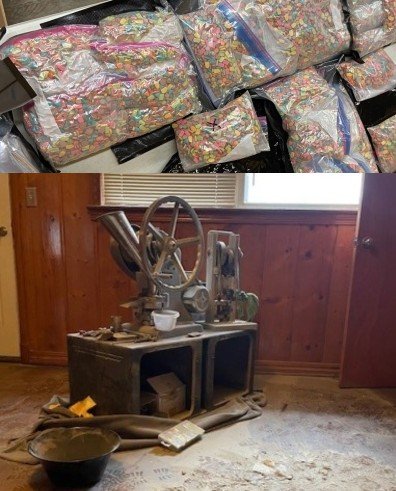
That evidence helped Mississippi law enforcement obtain a search warrant for Mosley’s home. Officers recovered:
- 36,056.76 grams of methamphetamine
- 7,403.20 grams of cocaine
- 18,601.53 grams of fentanyl
- 13 firearms
- A suppressor
- Body armor
- Two pill presses
Tuscaloosa co-defendant sentenced earlier
Hanston Alexander Clark, known as “Hank,” is 34 and from Tuscaloosa. He pleaded guilty in December 2025 to conspiracy to possess with intent to distribute methamphetamine and fentanyl. The court sentenced him to 121 months in prison.
Officials comment
“This defendant distributed dangerous pills across Alabama and Mississippi, putting lives and communities at risk,” Williams said. “Thanks to the tireless efforts of the DEA, our Homeland Security Task Force, and our law enforcement partners in Mississippi, he has been held accountable and will spend the next 25 years in federal prison. This sentence sends a clear message, that if you deal drugs, we will find you, prosecute you, and hold you accountable.”
Assistant U.S. Attorney Brittany T. Byrd called the case “an outstanding example of cross-district coordination.” She said information shared between the DEA in Birmingham, the DEA in Mississippi and the Mississippi Bureau of Narcotics led to the seizure of a large amount of narcotics that would have reached communities in both the Northern District of Alabama and the Southern District of Mississippi.
“Criminals work across borders, and our federal and state law enforcement partners will partner together to take down drug trafficking organizations working across state lines,” Byrd said.
DEA Special Agent in Charge John P. Scott said, “Fentanyl pill pressing operations pose a lethal threat to our communities, manufacturing poison with zero regard for human life.”
“Through the unified strength of the Homeland Security Task Force and our state and local partners, we dismantled a major cross-border network and seized dangerous narcotics, pill presses, and weapons before they could do more harm,” Scott said. “A 25-year sentence ensures this violent threat is removed from our streets.”
Agencies involved
The DEA investigated the case. The West Alabama Narcotics Task Force, the Mississippi Bureau of Narcotics, the Bureau of Alcohol, Tobacco, Firearms, and Explosives, the Tuscaloosa Police Department, the U.S. Secret Service and the Mississippi Attorney General’s Office assisted.
Assistant U.S. Attorneys Allison J. Garnett, Ryan S. Rummage and Brittany T. Byrd are prosecuting the case.
Readers can find more on drug trafficking cases in Alabama, including another Mississippi man’s conviction in a fentanyl and methamphetamine conspiracy.