
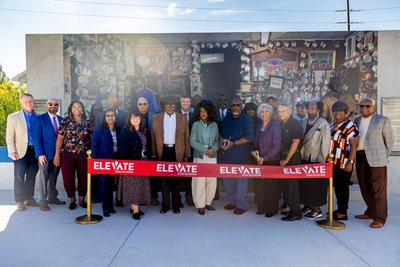
The City of Tuscaloosa cut the ribbon Wednesday on Linton’s Barbershop Plaza, a $1.4 million public space at 1305 T.Y. Rogers Jr. Avenue that honors the Rev. Thomas Linton and the city’s Civil Rights history.
The ceremony began at 10 a.m. on October 21. Mayor Walt Maddox, Councilor Joseph Eatmon and Tuscaloosa Civil Rights History & Reconciliation Foundation Co-President Tim Lewis spoke.
What the plaza includes
The plaza centers on an art installation by artist Caleb O’Connor. It represents the barbershop and includes a relief of Linton.
Story panels describe major milestones in Tuscaloosa’s Civil Rights history. A central walkway carries a timeline. The city paid for the project through its Elevate Tuscaloosa program, and construction began in 2025.
Who Reverend Linton was
Linton spent the last 40 years of his life preserving the history of Bloody Tuesday and the broader Civil Rights movement. He turned his barbershop into a living museum of memories and documents. Hundreds of visitors and school children learned there.
The Linton family sold the land where the barbershop stood to the city. The family hoped the site would continue to honor the courage and sacrifice of Civil Rights foot soldiers. The family also entrusted all of Linton’s Civil Rights artifacts to the Civil Rights Foundation.
What officials said
“Too often, we see efforts to overlook or forget the history that helped shape our country,” said Mayor Walt Maddox. “The City of Tuscaloosa has chosen to stand in the gap. We are committed to remembering our history, celebrating it and ensuring its lessons endure. By honoring our history, we honor the people who changed our community for the better. Reverend Linton’s legacy continues to make Tuscaloosa stronger, and today we celebrate that.”
Eatmon said the plaza gives the community room to develop new leaders.
“Today is an opportunity to recognize leaders in our community,” said Councilor Joe Eatmon. “It’s an opportunity to provide a space where future leaders in our community can meet and have those conversations that were once had in this barbershop.”
Lewis described the plaza as a first move toward something larger.
“This is step one towards making a bigger statement here in Tuscaloosa, having a place where we can show all of the things Reverend Linton collected that talked about the movement, but also talked about the history of Tuscaloosa,” said Tuscaloosa Civil Rights History & Reconciliation Foundation Co-President Tim Lewis.